

2026 Toyota bZ Battery Warranty Coverage Explained
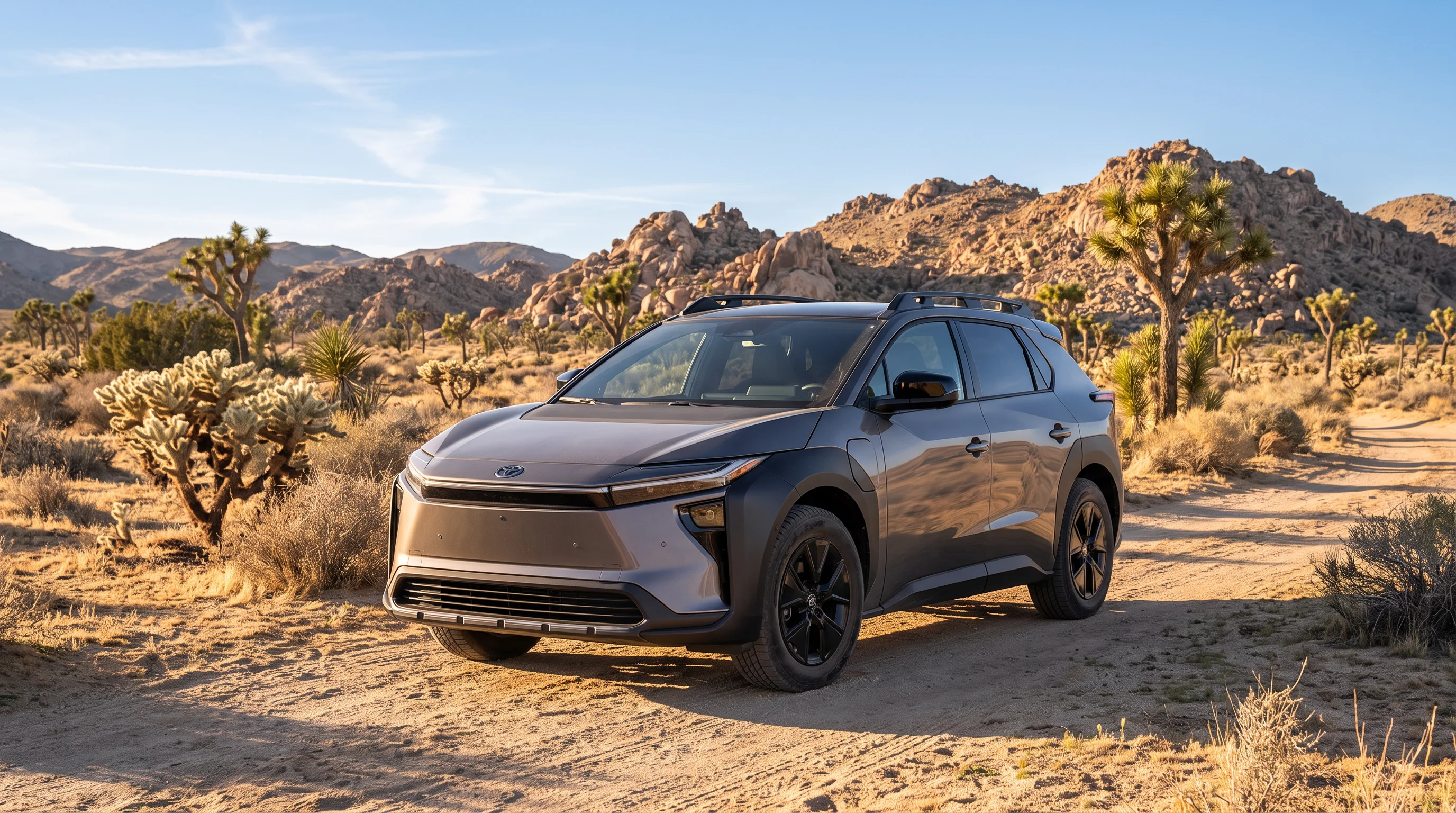
Toyota covers the high-voltage traction battery in the 2026 Toyota bZ for 8 years or 100,000 miles, whichever comes first. The bZ is the redesigned successor to the bZ4X. The coverage protects against factory defects in materials or workmanship. It also covers the battery if its capacity falls below 70% of the original within that window. These terms come from Toyota’s 2026 bZ Warranty & Maintenance Guide.
The battery is the heart of Toyota’s electric SUV. The XLE FWD uses a 57.7-kWh pack. Every other configuration uses a larger 74.7-kWh pack, per Toyota’s 2026 bZ announcement.
The bZ also includes a 3-year or 36,000-mile basic warranty. A 5-year or 60,000-mile powertrain warranty covers the drive shafts and axles. The platform also manages battery temperature to help protect cell health.
2026 Toyota bZ Warranty Coverage at a Glance
| Coverage | Term | What It Covers |
|---|---|---|
| EV Drive Components Warranty | 8 years / 100,000 miles | Traction battery (below 70% of original capacity), transaxle, inverter with converter |
| Basic Warranty | 3 years / 36,000 miles | Defects in materials or workmanship of Toyota-supplied parts |
| Powertrain Warranty | 5 years / 60,000 miles | EV control ECU, drive shafts, axle shafts and related drive components |
| ToyotaCare | 2 years / 25,000 miles | Factory-scheduled maintenance |
| ToyotaCare Roadside Assistance | 3 years / unlimited miles | 24-hour towing, jump-starts, out-of-charge assistance, lockout protection and tire service |
| Toyota Platinum BEV Vehicle Service Agreement (optional) | 6 years / 75,000 miles up to 10 years / 150,000 miles | Extended protection, purchased separately within the first 3 years or 36,000 miles |
This information is provided for general educational purposes only and does not constitute legal advice. Warranty coverage depends on the specific terms of your vehicle’s warranty agreement. Consult your owner’s manual or a qualified legal professional for guidance on your individual situation.
How Does the 70% Battery Capacity Coverage Work?
Toyota covers the 2026 bZ’s traction battery if its capacity falls below 70% of the original within 8 years or 100,000 miles. If that happens, the repair or replacement is handled under the factory warranty.
Normal Capacity Loss vs. Covered Capacity Loss
Every lithium-ion battery loses some capacity over time and use. Toyota’s warranty guide treats a loss of 30% or less as normal wear.
| Battery Capacity Within 8 Years / 100,000 Miles | Warranty Status |
|---|---|
| Loss of 30% or less | Considered normal; not covered |
| Below 70% of original capacity | Covered under the EV Drive Components Warranty |
This information is provided for general educational purposes only and does not constitute legal advice. Warranty coverage depends on the specific terms of your vehicle’s warranty agreement. Consult your owner’s manual or a qualified legal professional for guidance on your individual situation.
How the bZ Protects Its Battery
The bZ is built to slow that loss. A coolant system helps manage the battery’s temperature, and the battery warms itself before fast charging. The system also checks voltage, current and heat, according to Toyota.
Which EV Components and Charging Parts Are Covered?
Toyota’s Electric Vehicle Drive Components Warranty runs 8 years or 100,000 miles. It covers three parts: the traction battery (below 70% of its original capacity), the transaxle, and the inverter with converter. Other Toyota-supplied parts fall under the 3-year or 36,000-mile basic warranty.
California Zero-Emission Warranty
In California, the bZ also has Toyota’s California Zero-Emission Warranty. Some other states that follow California’s rules get it too. You can find the terms in Toyota’s 2026 bZ Warranty & Maintenance Guide.
| California Coverage | Term | What It Covers |
|---|---|---|
| Short-term propulsion defect warranty | 3 years / 50,000 miles | Propulsion-related parts |
| Long-term propulsion defect warranty | 7 years / 70,000 miles | Listed parts, including the charge inlet box, plug-in charging computer and EV charger cable |
This information is provided for general educational purposes only and does not constitute legal advice. Warranty coverage depends on the specific terms of your vehicle’s warranty agreement. Consult your owner’s manual or a qualified legal professional for guidance on your individual situation.
Charging Equipment on the 2026 bZ
The 2026 bZ uses an 11-kW onboard AC charger and comes with a dual-voltage charging cable. It has a North American Charging System (NACS) port. DC fast charging takes it from 10% to 80% in about 30 minutes under ideal conditions, per Toyota. For full charging details, see our 2026 Toyota bZ range and charging specs.
Charging times are estimates. The U.S. Department of Transportation’s charger types and speeds guidance notes that Level 2 equipment charges a battery-electric vehicle to 80 percent from empty in 4 to 10 hours, while Level 1 can take 40 to 50 or more hours. Your results will vary by vehicle and equipment.
What Do ToyotaCare and Roadside Assistance Add?
Factory warranty terms for the 2026 Toyota bZ are the same at every authorized Toyota dealership. ToyotaCare and Roadside Assistance come with every new bZ on top of those terms.
ToyotaCare Maintenance
Every new 2026 bZ includes ToyotaCare. It covers factory-scheduled maintenance for 2 years or 25,000 miles, whichever comes first.
24-Hour Roadside Assistance
On the bZ, ToyotaCare adds 24-hour Roadside Assistance for 3 years with no mileage limit, according to Toyota’s maintenance plans page. It covers:
- Towing
- Battery jump-starts
- Battery out-of-charge assistance
- Lockout protection
- Tire service
Optional Toyota Vehicle Service Agreements
Toyota also sells a Platinum BEV Vehicle Service Agreement for electric vehicles. Its terms range from 6 years or 75,000 miles up to 10 years or 150,000 miles. A new bZ is eligible within its first 3 years or 36,000 miles, according to Toyota Financial Services.
How Does Toyota Handle a Battery Capacity Claim?
A battery capacity claim starts with an inspection at a Toyota dealer. Toyota decides how to measure the battery’s capacity. It also decides whether to repair the battery, replace it, or use reconditioned or remanufactured parts.
If capacity has fallen below 70% of the original within 8 years or 100,000 miles, the service team files a factory warranty claim. A replacement battery may not return the vehicle to “as new” condition. Toyota ensures it holds at least as much energy as the original battery did just before the failure, per the 2026 bZ warranty guide.
The information in this article is general guidance and does not constitute a specific diagnostic or repair recommendation for any individual vehicle. Repair and maintenance decisions should be made in consultation with a certified technician based on the specific condition of your vehicle.
Common Questions About 2026 Toyota bZ Battery Warranty Coverage
Is battery capacity loss below 70% covered on the 2026 Toyota bZ?
Yes. If capacity falls below 70% of the original within 8 years or 100,000 miles, Toyota’s EV Drive Components Warranty covers the repair or replacement. A loss of 30% or less is considered normal.
This information is provided for general educational purposes only and does not constitute legal advice. Warranty coverage depends on the specific terms of your vehicle’s warranty agreement. Consult your owner’s manual or a qualified legal professional for guidance on your individual situation.
Does the EV warranty cover the onboard charger?
Toyota’s 8-year EV Drive Components Warranty lists three parts: the traction battery, the transaxle and the inverter with converter. Other Toyota parts fall under the 3-year or 36,000-mile basic warranty. In California, the Zero-Emission Warranty covers the charge inlet box, plug-in charging computer and EV charger cable for 7 years or 70,000 miles.
This information is provided for general educational purposes only and does not constitute legal advice. Warranty coverage depends on the specific terms of your vehicle’s warranty agreement. Consult your owner’s manual or a qualified legal professional for guidance on your individual situation.
What is the basic and powertrain warranty on the bZ?
The basic warranty covers defects in Toyota-supplied parts for 3 years or 36,000 miles. The powertrain warranty covers the EV control ECU, drive shafts and axle shafts for 5 years or 60,000 miles.
This information is provided for general educational purposes only and does not constitute legal advice. Warranty coverage depends on the specific terms of your vehicle’s warranty agreement. Consult your owner’s manual or a qualified legal professional for guidance on your individual situation.
What roadside assistance comes standard with the 2026 Toyota bZ?
Every new 2026 bZ gets 3 years of Roadside Assistance through ToyotaCare, with no mileage limit. It covers towing, jump-starts, out-of-charge help, lockouts and tire service. For help coordinating service, call our service team at 714-462-9434.
Service Your 2026 Toyota bZ at Tustin Toyota
Drivers from Irvine, Anaheim, Costa Mesa and Huntington Beach rely on our Tustin service team. To learn more about the model, visit our 2026 Toyota bZ research page. For warranty questions or electric vehicle maintenance, visit us at 36 Auto Center Dr, Tustin, CA 92782. You can also call our service team at 714-462-9434.
Disclaimers
This information is provided for general educational purposes only and does not constitute legal advice. Warranty coverage depends on the specific terms of your vehicle’s warranty agreement. Consult your owner’s manual or a qualified legal professional for guidance on your individual situation.
Charging times are estimates. The U.S. Department of Transportation’s charger types and speeds guidance notes that Level 2 equipment charges a battery-electric vehicle to 80 percent from empty in 4 to 10 hours, while Level 1 can take 40 to 50 or more hours. Your results will vary by vehicle and equipment.
The information in this article is general guidance and does not constitute a specific diagnostic or repair recommendation for any individual vehicle. Repair and maintenance decisions should be made in consultation with a certified technician based on the specific condition of your vehicle.