

Is the 2027 Toyota C-HR a Hybrid? Powertrain and Efficiency Explained
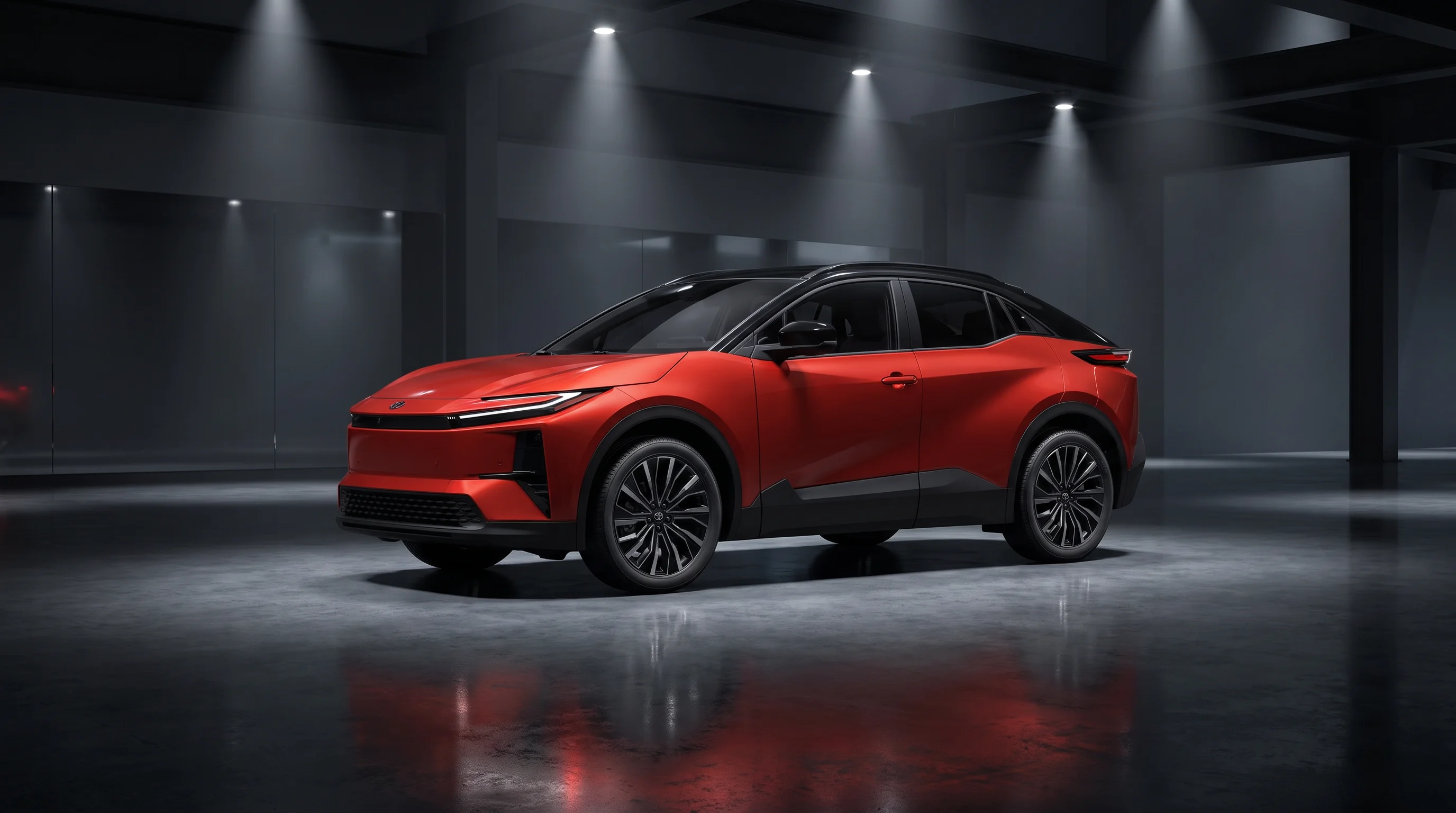
No. The 2027 Toyota C-HR sold in the U.S. is not a hybrid. It is a fully electric crossover SUV with no gasoline engine. It runs only on battery power, and you charge it by plugging in. Both U.S. grades, the SE and the XSE, use a 74.7-kWh lithium-ion battery and two electric motors.
Why Do Shoppers Ask If the Toyota C-HR Is a Hybrid?
The C-HR name has meant different things over the years. The C-HR was sold in the U.S. from 2018 through 2022 as a front-wheel-drive crossover with a 2.0-liter gas four-cylinder engine. In Europe, Toyota sells the C-HR with hybrid and plug-in hybrid powertrains. Those versions are not offered in the U.S.
| C-HR Version | Powertrain | Hybrid? | Sold New in the U.S.? |
|---|---|---|---|
| 2018–2022 Toyota C-HR (U.S.) | 2.0-liter gas four-cylinder | No | No, discontinued after 2022 |
| 2027 Toyota C-HR (U.S.) | Battery-electric, 74.7-kWh battery | No | Yes |
| Toyota C-HR (Europe) | Hybrid or plug-in hybrid | Yes | No |
If a hybrid is what you want, read our guide to the best Toyota hybrid for your Orange County commute. You can also explore the full Toyota electrified lineup.
What Powertrain Does the 2027 Toyota C-HR Use?
Every 2027 C-HR shares the same all-electric powertrain. Toyota’s C-HR specifications are the same for the SE and XSE grades.
| Specification | 2027 Toyota C-HR (SE and XSE) |
|---|---|
| Powertrain | Battery-electric (no gas engine) |
| Battery | 74.7-kWh lithium-ion |
| Motors | Front and rear electric motors |
| Drivetrain | Standard all-wheel drive |
| Output | 338 net combined horsepower |
| 0–60 mph | 4.9 seconds (manufacturer-estimated) |
| Charge Port | North American Charging Standard (NACS) |
Is the 2027 Toyota C-HR All-Wheel Drive?
Yes. All-wheel drive is standard on every 2027 C-HR. An electric motor powers each axle. Together they produce 338 net combined horsepower. Toyota estimates a 0-to-60 mph time of 4.9 seconds.
How Does Regenerative Braking Work in the C-HR?
When you lift off the accelerator, regenerative braking turns the vehicle’s motion back into electricity. That energy goes back to the battery while the C-HR slows down. You can turn it on, turn it off, or adjust it with the steering-wheel paddles. You still need the brake pedal to come to a full stop.
Range and Price of the 2027 Toyota C-HR SE and XSE
Range differs by grade. Toyota lists an EPA-estimated range of 287 miles for the SE and 273 miles for the XSE. The SE rides on 18-inch wheels, and the XSE rides on 20-inch wheels. Kelley Blue Book confirms 2027 pricing for both grades.
| Grade | Wheels | EPA-Estimated Range | Starting TSRP |
|---|---|---|---|
| SE | 18-inch | 287 miles | $38,675 TSRP |
| XSE | 20-inch | 273 miles | $40,675 TSRP |
EPA-estimated fuel economy figures are for comparison purposes only. Your actual mileage will vary depending on driving conditions, how you drive and maintain your vehicle, battery age/condition, and other factors.
Total Suggested Retail Price (TSRP) for new vehicles includes manufacturer and distributor options and delivery, processing, and handling fees, which are subject to change at any time. TSRP excludes taxes, title, license, dealer-installed options, accessories, fees and charges. TSRP is not the dealer advertised price. Dealer prices will vary. The dealer sets the final price.
Actual range will vary. Speed, outside temperature, accessory use, and how you drive all affect it. Battery capacity also decreases with time and use, which reduces range. For grade-by-grade features, see our Toyota C-HR model research page.
How Long Does It Take to Charge the 2027 Toyota C-HR?
Charge time depends on the power source. Toyota’s C-HR charging estimates under ideal conditions are below. The C-HR includes a dual-voltage charging cable for Level 1 and Level 2 charging.
| Charging Method | Power Source | Estimated Charge Time |
|---|---|---|
| Level 1 | Standard 120V household outlet (12A) | About 60 hours, 10% to 100% |
| Level 2 | 11 kW source (48A) | About 7 hours, 10% to 100% |
| DC Fast Charging | Compatible DC fast charger (NACS port) | About 30 minutes, 10% to 80% |
Level 2 charging makes a full charge overnight practical at home. Cold weather can lengthen DC fast-charging times. The C-HR’s battery preconditioning warms the battery to help speed up DC fast charging in the cold. New to electric driving? Our guide to how electric vehicles work covers the basics.
What Warranty Covers the 2027 Toyota C-HR Battery?
Toyota covers the C-HR’s Electric Vehicle Driving Components, including the traction battery, for 8 years or 100,000 miles, whichever comes first. Like all lithium-ion batteries, the C-HR’s battery will lose some capacity over its life.
This information is provided for general educational purposes only and does not constitute legal advice. Warranty coverage depends on the specific terms of your vehicle’s warranty agreement. Consult your owner’s manual or a qualified legal professional for guidance on your individual situation.
Common Questions About the 2027 Toyota C-HR Powertrain and Efficiency
Does the 2027 Toyota C-HR need to be plugged in to charge?
Yes. The 2027 Toyota C-HR is fully electric, so it has no gas engine to recharge its battery. You can charge it from a standard household outlet with the included dual-voltage cable, a Level 2 charger, or a DC fast charger. Regenerative braking recovers some energy while you drive, but it does not replace plugging in.
How fast can the 2027 Toyota C-HR charge at a public fast charger?
Under ideal conditions, the 2027 Toyota C-HR charges from 10% to 80% in about 30 minutes at a compatible DC fast charger through its NACS port. Cold weather can lengthen DC charging times. At home, an 11 kW (48A) Level 2 source charges the battery from 10% to 100% in about seven hours.
See the 2027 Toyota C-HR at Tustin Toyota
The 2027 Toyota C-HR pairs a coupe-like design with all-electric power and standard all-wheel drive. Visit our Orange County showroom to see it up close and take a test drive. Call our sales team at (714) 909-2159, or stop by 36 Auto Center Dr, Tustin, CA 92782.
Disclaimers
EPA-estimated fuel economy figures are for comparison purposes only. Your actual mileage will vary depending on driving conditions, how you drive and maintain your vehicle, battery age/condition, and other factors.
Total Suggested Retail Price (TSRP) for new vehicles includes manufacturer and distributor options and delivery, processing, and handling fees, which are subject to change at any time. TSRP excludes taxes, title, license, dealer-installed options, accessories, fees and charges. TSRP is not the dealer advertised price. Dealer prices will vary. The dealer sets the final price.
This information is provided for general educational purposes only and does not constitute legal advice. Warranty coverage depends on the specific terms of your vehicle’s warranty agreement. Consult your owner’s manual or a qualified legal professional for guidance on your individual situation.