Open Today Sales: 9 AM-9 PMOpen Today Service: 7 AM-7 PM
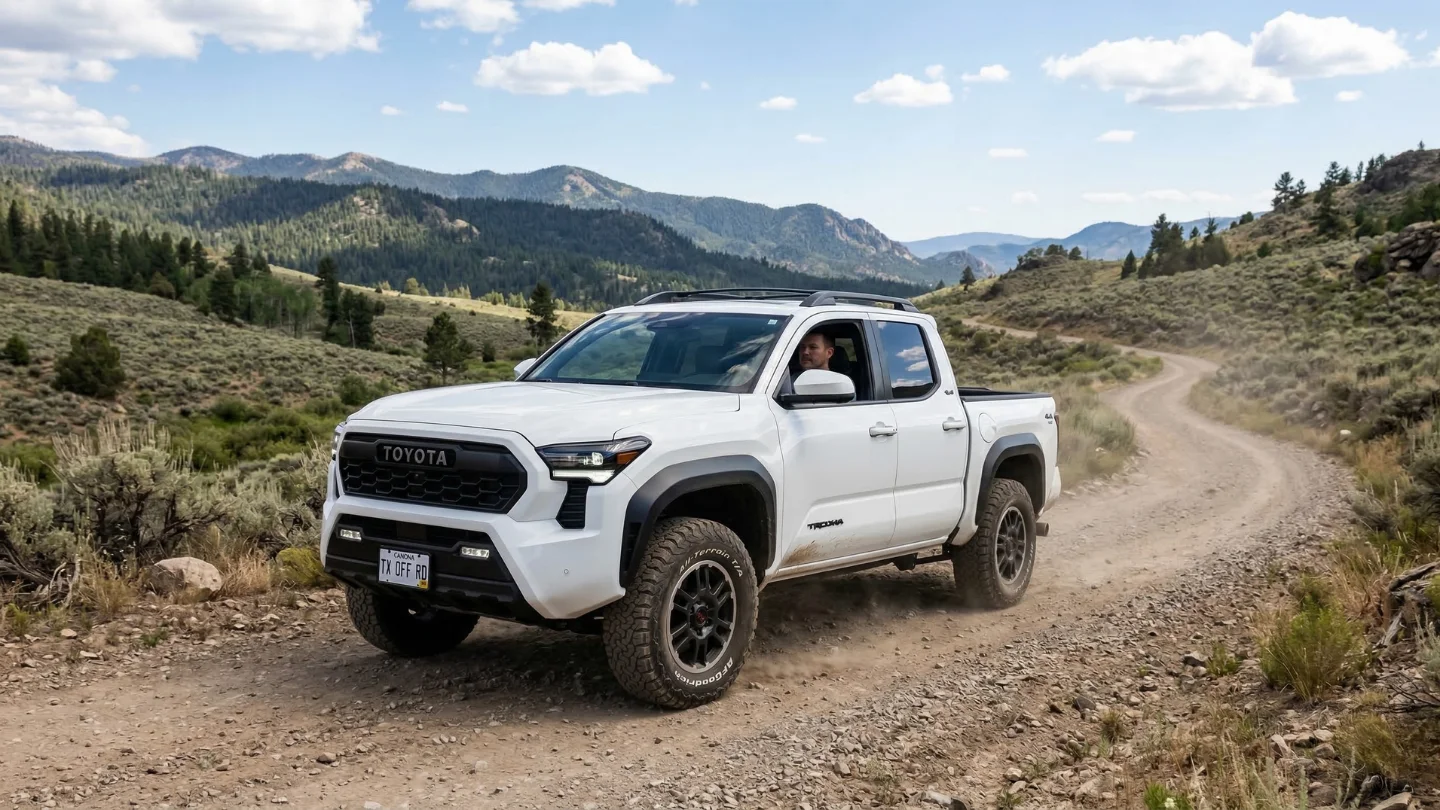
Four-wheel drive gives your vehicle extra traction when conditions get tough — but only if you know which setting to use. The difference between 4H and 4L comes down to speed versus torque: 4H keeps you moving at normal speeds with added grip, while 4L delivers maximum pulling power at a crawl. Whether you’re driving through rain-soaked streets in Tustin or tackling steep trails in the foothills near Corona, choosing the right 4WD mode protects your drivetrain and keeps you in control. Here’s how each setting works and when to use them.
4H stands for Four-Wheel Drive High. When you engage 4H, your vehicle’s transfer case locks the front and rear driveshafts together so all four wheels receive power simultaneously. The “High” designation refers to the gear ratio — it stays close to your vehicle’s standard drive configuration, which means you can maintain normal driving speeds while gaining improved traction.
In practical terms, 4H is the setting you reach for on moderately slippery surfaces: wet roads, light snow, loose gravel, or packed dirt. Most manufacturers recommend keeping speeds under 55 mph in 4H, though conditions should always dictate your speed. Many modern 4WD systems — including those found on Toyota trucks and SUVs like the Tacoma, 4Runner, and Tundra — allow you to engage 4H while driving at moderate speeds, a feature known as “shift-on-the-fly.”
4H enhances stability without sacrificing speed or fuel efficiency. A driver in Huntington Beach might engage 4H when navigating wet coastal roads during a heavy winter storm, benefiting from added grip without needing to slow to a crawl.
4L stands for Four-Wheel Drive Low. This setting engages an additional set of lower gears inside the transfer case, multiplying torque output while significantly reducing wheel speed. On most stock Toyota transfer cases, the low-range gear ratio falls between approximately 2.3:1 and 2.6:1 — meaning the engine delivers roughly two-and-a-half times more torque to the wheels compared to high range.
4L is engineered for situations where power and control at very low speeds are critical: steep inclines, deep mud, heavy snow, sand, or rocky trails. The recommended maximum speed in 4L is typically 15–25 mph, and exceeding that risks drivetrain damage and heat buildup.
Unlike 4H, engaging 4L typically requires your vehicle to be stationary or moving very slowly, with the transmission shifted into neutral. This is because of the significant mechanical changes the transfer case undergoes when switching into low range. If you’re planning a weekend run through the foothills near Corona, 4L gives you the precise control and extra pulling power to navigate steep, uneven terrain without overworking the engine.
The core difference between 4H and 4L is how the transfer case modifies gear ratios between the transmission and the wheels.
In 4H, the transfer case operates at essentially a 1:1 ratio — locking front and rear driveshafts together for even power distribution without changing the overall gearing. You get traction benefits while maintaining speed and fuel efficiency. Think of it as adding grip without changing how the vehicle fundamentally drives.
In 4L, the transfer case activates a lower gear set that multiplies torque before it reaches the wheels. The engine runs at higher RPMs relative to wheel speed, delivering more force per rotation. This is what gives 4L its crawling ability — the vehicle moves slowly but with substantially more power available at each wheel.
A simple way to think about it: 4H is a traction boost for driving. 4L is a power boost for crawling.
Gear ratio near 1:1. Speeds up to 55 mph. Use on wet roads, light snow, gravel, and packed dirt. Shift-on-the-fly capable on most Toyota 4WD models.
Gear ratio ~2.3:1 to 2.6:1 (Toyota). Max 15–25 mph. Use for steep inclines, deep mud, sand, rocks, and heavy snow. Requires neutral and near-stop to engage.
Engage 4H when road surfaces are slippery but you still need to maintain reasonable speed. Common situations include wet pavement during heavy rain, light snow or icy patches on surface streets, loose gravel or packed dirt roads, and sandy stretches where tires may lose grip.
4H is ideal for conditions around Irvine, Anaheim, and Tustin — suburban environments where occasional slippery conditions demand extra traction but speeds remain normal. The key rule: if the surface is slippery and you’re driving above 25 mph, 4H is the correct setting.
Important: 4H should not be used on dry pavement. Part-time 4WD systems lock the front and rear axles together with no center differential, so driving on high-traction surfaces causes drivetrain binding — stress that accumulates in the transfer case, driveshaft, and differential gears. You’ll notice stiff steering and clunking during turns. Disengage 4WD when conditions improve.
Switch to 4L when the terrain demands maximum torque at low speeds. This includes steep hill climbs or descents, deep mud, sand, or heavy snow, rocky trails requiring precise wheel placement, and towing heavy loads on slippery surfaces.
4L is not designed for highway driving, dry pavement, or any situation where you need to exceed 25 mph. The increased torque and reduced speed put additional strain on drivetrain components, and using 4L inappropriately leads to excessive heat buildup and accelerated wear.
The simple decision rule: if you’re moving faster than 25 mph, you should be in 4H. If you need maximum crawling power at walking speed, that’s 4L territory.
Proper maintenance keeps your Toyota’s four-wheel-drive system performing reliably for years. A few key practices make a significant difference.
Engage your 4WD periodically. Even if you rarely encounter challenging conditions, cycling through 4H and 4L occasionally keeps internal components lubricated and prevents seals from drying out — which can lead to leaks and premature wear.
Monitor transfer case and differential fluids. These fluids degrade over time and lose their ability to protect gears and bearings. Toyota recommends having them inspected and changed according to your vehicle’s maintenance schedule. Certified technicians at Tustin Toyota use genuine Toyota fluids designed to meet factory specifications.
Inspect tires regularly. Uneven wear or mismatched tires strain the drivetrain, especially when 4WD is engaged. Proper tire pressure and regular rotation maintain balanced traction and reduce mechanical stress across all four wheels.
Watch for warning signs. Unusual noises, vibrations, or difficulty shifting between 4H and 4L are signals that something needs attention. Early diagnosis prevents minor issues from becoming costly repairs.
If your Toyota 4WD system needs an inspection or routine service, schedule an appointment online or call us at 714-462-9434.
Toyota builds some of the most capable 4WD systems on the road. Models like the 4Runner, Tacoma, Tundra, and Land Cruiser offer part-time and full-time 4WD configurations designed for everything from daily commuting in Tustin to serious trail work in the mountains. Whether you’re looking for a truck built for the job site or an SUV ready for weekend adventures, browse our new Toyota truck inventory to find your match — or value your trade to get started.
Toyota announced the 2027 Sequoia on July 23, 2026. The announcement covered styling, cabin technology, safety and off-road capability — but Toyota has not yet released full specifications or pricing, and says those will come closer to the start of production in fall 2026. This page covers only what Toyota has officially confirmed, plus current…
Choosing between a new Toyota and a Toyota Certified Pre-Owned vehicle comes down to one question: which matters more to you, upfront savings or a fresh start? A new Toyota has no previous owners and full factory coverage from day one. A certified Toyota costs less because someone else took the biggest depreciation hit, and…
Toyota revealed the updated 2027 Tundra in July 2026. The big changes are a sharper front end, a new Trailhunter package, a standard 14-inch touchscreen and Toyota Safety Sense 4.0. Full specs and pricing aren’t out yet. Toyota says those details are scheduled to be announced in fall 2026. This guide shows what Toyota has…