

How to Choose Between an Electric and Hybrid Car: A Tustin Buyer’s Guide
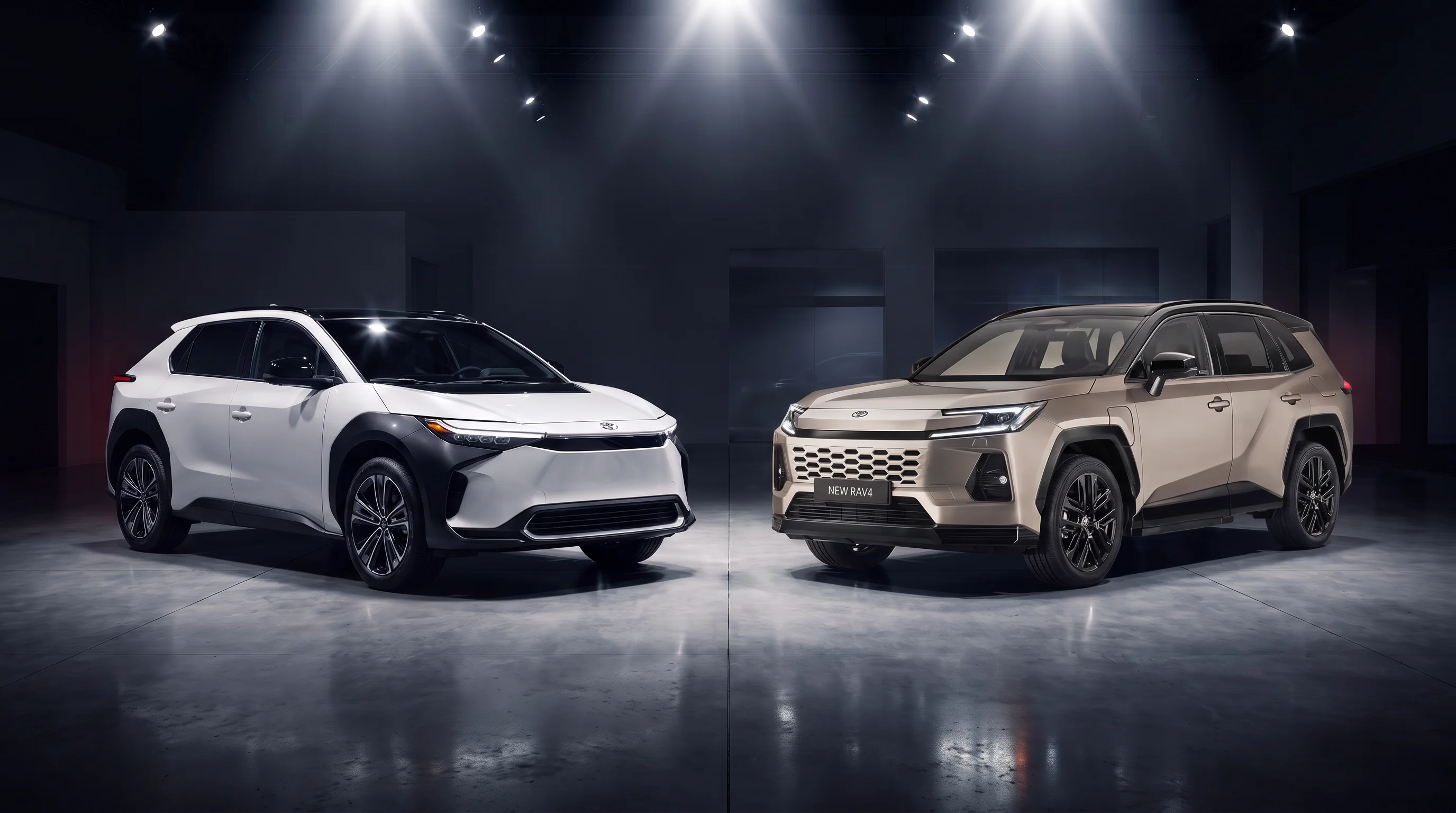
Choosing between an electric car and a hybrid comes down to three questions. Where can you charge? How far do you drive each day? How much do you want to spend up front?
An electric vehicle (EV) runs only on battery power and uses no gasoline. A standard hybrid pairs a gas engine with an electric motor. It recharges its small battery on its own, so you never plug it in. A plug-in hybrid (PHEV) blends both. Its larger battery powers all-electric driving before the car switches to hybrid mode.
What Is the Difference Between an EV, a Plug-In Hybrid, and a Hybrid?
Conventional Hybrids
Knowing how each powertrain works is the first step in matching a vehicle to your Orange County routine. A conventional hybrid, like the 2026 Toyota Prius or the 2026 Toyota Camry, fuels up only at the gas pump. You drive and refuel it like any car. The electric motor helps the engine accelerate and captures energy when you brake. You get better fuel economy with no change to your habits or your home.
Plug-In Hybrids
Plug-in hybrids bridge gas power and full electric driving. You charge a PHEV from a wall outlet or a charging station. Many daily errands and short commutes can then run on electricity alone. The Prius Plug-in Hybrid offers up to an EPA-estimated 44 miles of all-electric range. The RAV4 Plug-in Hybrid SE offers up to an EPA-estimated 54 miles. When the battery runs low, the car runs as an efficient hybrid on its 2.0L or 2.5L gas engine.
Electric Vehicles
Pure electric vehicles, like the 2026 Toyota bZ, have no gas engine or fuel tank. A large battery powers electric motors instead. EV drivers charge at home overnight or at public stations. That means no fuel stops and no tailpipe emissions. For a deeper look at the technology, read our guide to how electric vehicles work.
Do an EV’s Lower Running Costs Offset Its Higher Price?
An EV costs more up front, but lower charging and maintenance costs can offset that over several years. The savings are largest when you charge mostly at home. EVs also skip engine service such as oil changes, spark plugs, and engine air filters.
Why Hybrids Cost Less Up Front
Conventional hybrids start at a lower price and save fuel from day one. No home charger is needed. The 2026 Toyota Prius LE has a TSRP of $29,845. It earns an EPA-Estimated 57 city / 56 highway / 57 combined mpg. The Prius LE AWD has a TSRP of $31,245. It earns an EPA-Estimated 53 city / 54 highway / 54 combined mpg. A lower price also means a smaller loan balance.
Total Suggested Retail Price (TSRP) for new vehicles includes manufacturer and distributor options and delivery, processing, and handling fees, which are subject to change at any time. TSRP excludes taxes, title, license, dealer-installed options, accessories, fees and charges. TSRP is not the dealer advertised price. Dealer prices will vary. The dealer sets the final price.
EPA-estimated fuel economy figures are for comparison purposes only. Your actual mileage will vary depending on driving conditions, how you drive and maintain your vehicle, battery age/condition, and other factors.
How Public Charging Changes the Math
Public fast charging costs far more per kilowatt-hour than charging at home. That can shrink an EV’s running-cost edge. A frugal hybrid like the 2026 Toyota Camry LE earns an EPA-Estimated 51 combined mpg. If you would rely mostly on public chargers, a hybrid is often the simpler financial choice.
EPA-estimated fuel economy figures are for comparison purposes only. Your actual mileage will vary depending on driving conditions, how you drive and maintain your vehicle, battery age/condition, and other factors.
What Does Home Charging Cost and How Fast Is It?
A home Level 2 charger installation costs about $749 to $2,500, with an average of $1,700, according to Qmerit’s 2026 installation data. Two things drive the price most: your electrical panel’s capacity and the distance from the panel to where you park. If your panel needs an upgrade, the total cost goes up.
Level 1 vs. Level 2 Charging
A standard 120-volt outlet adds about 5 miles of range per hour. A Level 2 charger uses a 240-volt circuit, like the outlet for an electric clothes dryer. It charges much faster. A Level 2 charger can fully charge an EV like the 2026 Toyota bZ overnight.
| Charging Level | Power Source | Setup Needed | Prius Plug-in Hybrid Full Charge |
|---|---|---|---|
| Level 1 | Standard 120-volt household outlet | None — plugs into an existing outlet | About 11 hours |
| Level 2 | Dedicated 240-volt circuit | Installed by a licensed electrician | About 4 hours |
When Is a Hybrid or Plug-In Hybrid the Better Choice?
A hybrid or plug-in hybrid is often the better commuting choice in three cases. You don’t have home charging. You often drive long highway distances. Or you want the flexibility of a quick stop at the gas station.
Commuting Between Corona and Orange County
If you commute between Corona and Orange County on the 91 Freeway, you know it is one of the region’s most congested corridors. A conventional hybrid handles stop-and-go traffic well. Its electric motor gives instant torque at low speeds. Its gas engine takes over on open stretches. You never have to plan your route around chargers.
Where Plug-In Hybrids Fit
Plug-in hybrids are a middle ground for suburban drivers. If your round-trip commute fits within your PHEV’s electric range, you can drive to work on battery power. Gasoline then covers weekend errands and longer trips. For model-by-model advice, see which Toyota hybrid is best for your Orange County commute.
Which Powertrain Fits Your Driving?
| Powertrain | Charging Access | Choose It If You Want |
|---|---|---|
| Hybrid | None needed — works for street or apartment parking without chargers | Flexibility for unpredictable daily mileage and the lowest upfront purchase price |
| Plug-In Hybrid | Home charging overnight | Electric driving for a consistent commute within the vehicle’s electric range, plus gas-powered peace of mind for long road trips |
| Electric Vehicle | Dedicated 240-volt home charging | Zero tailpipe emissions and maximum savings on routine fuel and service |
Explore Toyota’s electrified lineup to see the hybrids, plug-in hybrids, and EVs available.
How Does Maintenance Differ Between Hybrids, PHEVs, and EVs?
Does a Plug-In Hybrid Need Oil Changes Like a Gas Car?
Yes. A PHEV has a gas engine, so it needs regular oil and filter changes on its factory schedule. Hybrids and plug-in hybrids need the same general maintenance as conventional vehicles. The engine still needs fresh oil to protect its parts, even if you drive mostly on electric power.
Toyota schedules engine service by time or mileage, whichever comes first. At routine visits, certified technicians replace the engine oil. They also check coolant for the engine and the high-voltage inverter, and they inspect filters.
Engine Oil & Filter
Required at recommended mileage or time intervals
Brake Pads & Rotors
Longer service life thanks to regenerative braking
Inverter Coolant
Inspected and serviced per the factory maintenance schedule
Longer Brake Life for Hybrids and PHEVs
Hybrids and PHEVs share one maintenance advantage: brakes that generally last longer. When you press the brake pedal, the car first uses regenerative braking. That captures energy for the battery before the brake pads engage. The result is less wear on pads and rotors than in a conventional gas car.
The information in this article is general guidance and does not constitute a specific diagnostic or repair recommendation for any individual vehicle. Repair and maintenance decisions should be made in consultation with a certified technician based on the specific condition of your vehicle.
What Should You Test Before Choosing an EV or Hybrid?
A test drive shows you how each powertrain feels day to day. Pay attention to braking feel, power transitions, climate control, and driver-assist technology.
When you drive an electrified vehicle along the coastal roadways of Huntington Beach, notice how it speeds up and slows down. Electric motors deliver instant torque, so acceleration from a stop feels smooth. Coast to a gradual stop to feel the regenerative braking blend with the regular brakes.
Try the regenerative braking in stop-and-go traffic before you test highway merging. In a conventional hybrid, listen for how quietly the gas engine turns on and off. In a pure EV like the 2026 Toyota bZ, notice the quiet cabin and the range display.
Test Drive Checklist
Regenerative Braking
Feel how the car slows in stop-and-go traffic
Powertrain Transition
Listen for smooth gas engine engagement in hybrids
Driver Assists
Try adaptive cruise control and lane departure alert on the highway
Cabin Climate
Check how quickly the A/C cools the cabin in warm weather
Be sure to try Toyota Safety Sense features such as adaptive cruise control and lane departure alert on the highway.
Driver-assistance and advanced safety systems are supplemental aids and are not substitutes for safe and attentive driving. Availability, operation, and effectiveness vary by trim and equipment and depend on factors including road, weather, traffic, and vehicle condition. Always keep your hands on the wheel and your eyes on the road. See your owner’s manual for system limitations and details.
Common Questions About Choosing an EV or Hybrid
How much electric-only range do plug-in hybrids get?
The 2026 Prius Plug-in Hybrid offers up to an EPA-estimated 44 miles of all-electric range. The 2026 RAV4 Plug-in Hybrid SE offers up to 54 miles. When the battery runs low, both switch to hybrid mode automatically. Your trip is never limited by the battery.
Do conventional hybrid cars require gasoline?
Yes. Gasoline is the main fuel for a conventional hybrid. The gas engine does most of the work at higher speeds. The electric motor helps, and the battery recharges as you slow down and cruise.
How long does it take to charge a plug-in hybrid at home?
The 2026 Toyota Prius Plug-in Hybrid takes about 11 hours on a standard 120-volt household outlet. On a 240-volt Level 2 charger, it takes about 4 hours.
How does regenerative braking extend brake pad life in hybrids?
Regenerative braking turns the electric motor into a generator. It slows the car and sends that energy back to the battery. Because the motor does much of the slowing, the brake pads wear less and last longer.
What maintenance do pure electric vehicles skip compared with gas cars?
Pure electric vehicles have no gas engine. Owners never need oil changes, oil filters, or spark plugs. In California, fully electric vehicles are also exempt from smog checks.
Ready to Choose? Compare Toyota Hybrids and EVs in Tustin
The right choice comes down to your charging access, daily driving distance, and budget. EVs offer quiet, fuel-free driving when you can charge at home. Hybrids and plug-in hybrids offer flexibility and quick refueling for any trip.
Our team at Tustin Toyota can help you compare powertrains clearly and simply. Visit our showroom at 36 Auto Center Dr in Tustin to test drive the latest Toyota hybrid and EV models.
Disclaimers
Total Suggested Retail Price (TSRP) for new vehicles includes manufacturer and distributor options and delivery, processing, and handling fees, which are subject to change at any time. TSRP excludes taxes, title, license, dealer-installed options, accessories, fees and charges. TSRP is not the dealer advertised price. Dealer prices will vary. The dealer sets the final price.
EPA-estimated fuel economy figures are for comparison purposes only. Your actual mileage will vary depending on driving conditions, how you drive and maintain your vehicle, battery age/condition, and other factors.
The information in this article is general guidance and does not constitute a specific diagnostic or repair recommendation for any individual vehicle. Repair and maintenance decisions should be made in consultation with a certified technician based on the specific condition of your vehicle.
Driver-assistance and advanced safety systems are supplemental aids and are not substitutes for safe and attentive driving. Availability, operation, and effectiveness vary by trim and equipment and depend on factors including road, weather, traffic, and vehicle condition. Always keep your hands on the wheel and your eyes on the road. See your owner’s manual for system limitations and details.
0 comment(s) so far on How to Choose Between an Electric and Hybrid Car: A Tustin Buyer’s Guide