

How to Choose Between a Hybrid and Electric Toyota
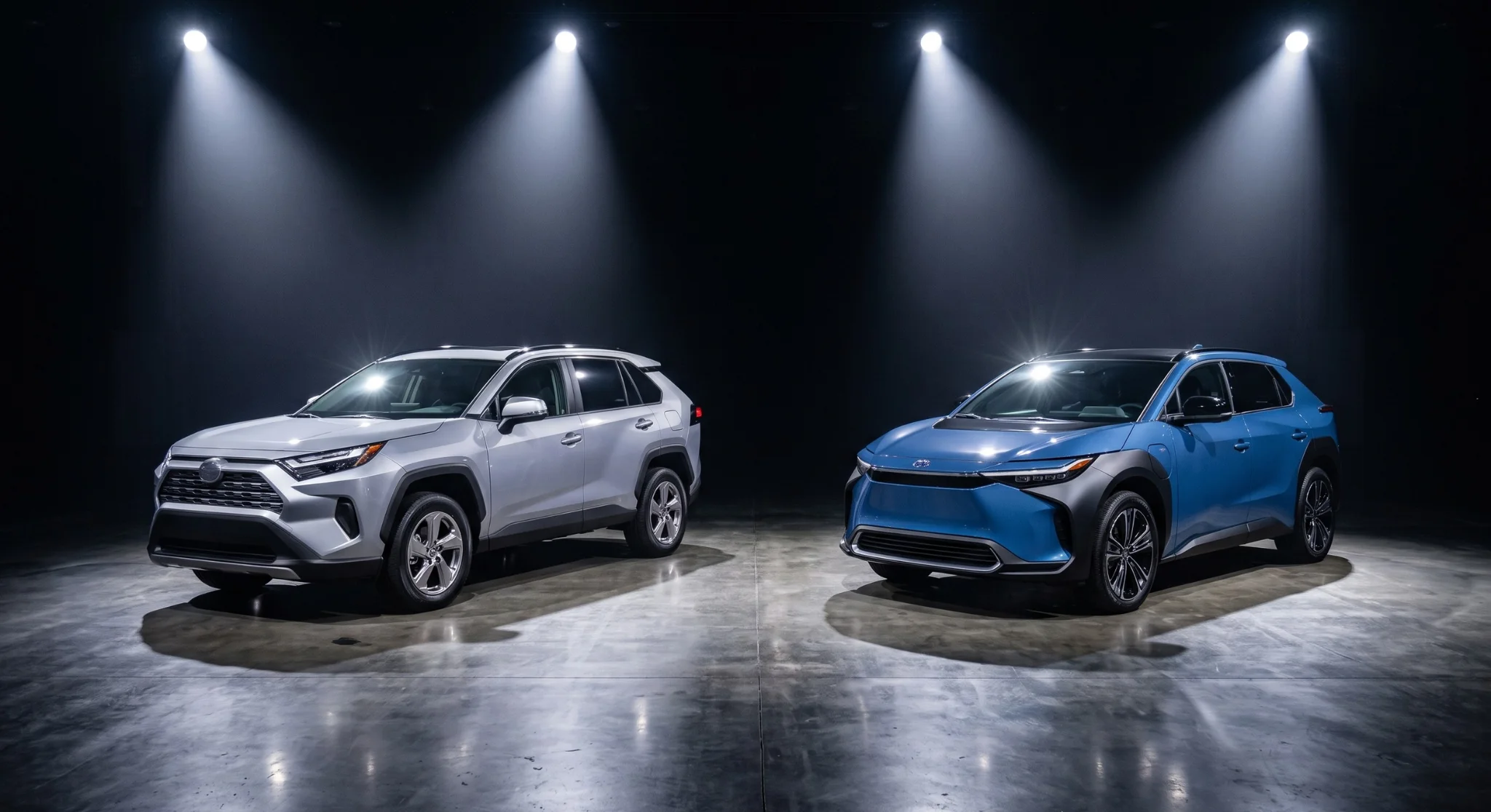
Choosing your powertrain is one of the most important decisions you will make when shopping for a new vehicle. At Tustin Toyota, we help drivers weigh three electrified options every day: the standard hybrid, the plug-in hybrid, and the all-electric vehicle. Each one stores and uses energy differently, and the right fit depends on how far you drive, where you can charge, and how you want to refuel. Here is a clear, side-by-side look to help you decide which technology matches your lifestyle.
The Three Electrified Powertrains at a Glance
All three technologies reduce fuel use, but they differ in one key way: whether you ever need to plug in. Standard hybrids never require charging, plug-in hybrids give you a short electric-only range before switching to gas, and all-electric vehicles run entirely on battery power. The table below summarizes how they compare.
| Consideration | Standard Hybrid (HEV) | Plug-in Hybrid (PHEV) | All-Electric (BEV) |
|---|---|---|---|
| Needs to be plugged in? | No | Optional (to use electric range) | Yes |
| Gas engine? | Yes | Yes | No |
| Electric-only driving | Brief, low-speed assist only | Dedicated short-trip range | Full-time, all trips |
| How you refuel | Gas station only | Gas station and/or charging | Charging only |
| Tailpipe emissions | Reduced | Reduced (zero in electric mode) | Zero |
| Best for drivers who… | Want efficiency with zero routine changes | Have short commutes but take occasional long trips | Can charge at home or work and want the lowest running costs |
How Each Technology Works
Standard Hybrid (HEV)
A standard hybrid pairs a gasoline engine with an electric motor and a compact battery pack. It manages the two power sources automatically, so there is nothing new to learn and nothing to plug in.
- Combines a gasoline engine with an electric motor for improved efficiency.
- Recaptures energy during braking and deceleration to recharge its own battery.
- Never plugs in, you simply refuel at any standard gas station.
- Delivers strong fuel economy with zero change to your daily routine.
Plug-in Hybrid (PHEV)
A plug-in hybrid bridges the gap between a standard hybrid and a full EV. It carries a larger battery than a standard hybrid, giving you a dedicated electric-only range for short daily trips.
- Offers a meaningful all-electric range for commuting and errands.
- Seamlessly switches to efficient hybrid operation once the electric charge is used up.
- Can be plugged in to maximize electric driving, or simply fueled like a regular hybrid.
- Removes range anxiety while still letting you drive on electricity most days.
All-Electric (BEV)
A battery-electric vehicle removes the gasoline engine entirely, relying on large battery packs and electric motors for propulsion. It represents the fullest step into electric driving.
- Runs purely on battery power, with no gas engine, oil changes, or tailpipe emissions.
- Delivers instant torque from a standstill for smooth, immediate acceleration.
- Offers a notably quiet cabin thanks to the absence of an engine.
- Requires access to home or public charging to keep the battery topped up.
Charging and Range Dynamics
The biggest practical difference between these powertrains is how you keep them running. Standard hybrids never require charging, so a full gas tank and their high efficiency mean long stretches between fill-ups with zero downtime. Plug-in hybrids and all-electric vehicles introduce charging into the picture, which is simpler than many first-time shoppers expect.
Charging speed depends entirely on the equipment you use. The three common charging levels break down as follows:
| Charging Level | Power Source | Typical Use |
|---|---|---|
| Level 1 | Standard 120-volt household outlet | Adds roughly 3 to 5 miles of range per hour, best for overnight top-offs on short commutes |
| Level 2 | 240-volt outlet (like a clothes dryer) | The most common home setup, comfortably restores a full charge overnight |
| DC Fast Charging | High-power public charging station | Can take the battery from roughly 10% to 80% in about 30 minutes under ideal temperature conditions |
Toyota’s current all-electric models now use a NACS charging port, which opens up access to the Tesla Supercharger network in addition to standard public charging stations, making road trips and on-the-go charging more convenient than ever.
EPA-estimated fuel economy figures are for comparison purposes only. Your actual mileage will vary depending on driving conditions, how you drive and maintain your vehicle, battery age/condition, and other factors.
Long-Term Ownership and Warranty
Both hybrids and all-electric vehicles offer clear advantages over traditional gas-only cars, though they save you money in different ways. Understanding those differences helps you match the technology to your budget and driving habits.
- Hybrids combine low running costs with strong efficiency and traditionally high resale value, all with no charging equipment required.
- All-electric vehicles have far fewer moving parts, no engine oil, no spark plugs, and no emissions equipment, so routine service is largely limited to tires, cabin air filters, and brake inspections.
- Regenerative braking on electrified vehicles uses the electric motor to help slow the vehicle, which can extend the life of brake pads and rotors.
Both options are backed by strong factory battery coverage. For Toyota electrified vehicles from the 2020 model year onward, coverage breaks down as follows:
| Component | Coverage |
|---|---|
| Hybrid (HV) battery | 10 years / 150,000 miles, whichever comes first |
| EV Drive Components (traction battery, transaxle, inverter with converter) | 8 years / 100,000 miles, whichever comes first |
This information is provided for general educational purposes only and does not constitute legal advice. Warranty coverage depends on the specific terms of your vehicle’s warranty agreement. Consult your owner’s manual or a qualified legal professional for guidance on your individual situation.
Frequently Asked Questions
Do I need to install a special charging station at home if I buy a standard hybrid?
No. Standard hybrids do not plug in at all. They charge their own battery automatically using regenerative braking and the gasoline engine while you drive. You only need to consider home charging if you choose a plug-in hybrid or an all-electric vehicle.
How does cold weather affect an electric vehicle’s battery performance?
In colder temperatures, battery chemistry slows down, and running the cabin heater draws additional power, which can temporarily reduce driving range. Because Southern California’s climate features mild seasonal swings, local EV owners typically experience very minimal range loss compared with drivers in freezing northern states.
Can I still qualify for a federal tax credit if I buy a new electric vehicle today?
No. The federal clean vehicle tax credits under IRC Section 30D were terminated by Public Law 119-21 for all vehicles acquired after September 30, 2025. The only exception is if you entered into a binding written contract and made a payment on or before September 30, 2025, and are just now taking delivery. We recommend consulting your tax professional to verify your specific situation. For details, see the IRS Clean Vehicle Tax Credits page at irs.gov/clean-vehicle-tax-credits.
What happens if a hybrid battery goes completely dead while driving?
A hybrid relies on its battery pack to start the gasoline engine and power the electric motor, so it cannot operate without it. Fortunately, total battery failures are extremely rare, and the system is designed to give you early warning lights on the dashboard long before the battery loses operational capacity.
Explore Toyota’s Electrified Options at Tustin Toyota
Finding the right powertrain is much easier when you can experience the differences back to back. When you visit, our team will walk you through the dashboard displays, show you how regenerative braking feels, and explain exactly how to connect to public charging networks, all in a relaxed, no-pressure setting where you can make an informed decision at your own pace. To see how these technologies come to life across current models, browse our new-vehicle inventory or reach out with any questions. You can also speak directly with one of our product specialists by calling 714-909-2159 today.
Disclaimers
EPA-estimated fuel economy figures are for comparison purposes only. Your actual mileage will vary depending on driving conditions, how you drive and maintain your vehicle, battery age/condition, and other factors.
This information is provided for general educational purposes only and does not constitute legal advice. Warranty coverage depends on the specific terms of your vehicle’s warranty agreement. Consult your owner’s manual or a qualified legal professional for guidance on your individual situation.
This content is provided for general informational purposes only and does not constitute financial, tax, or legal advice. Pricing, availability, and specifications are subject to change. Please contact the dealership for current details and consult a qualified professional regarding your individual situation.
0 comment(s) so far on How to Choose Between a Hybrid and Electric Toyota