

What’s the Difference Between a Hybrid and a Plug-In Hybrid?
If you have been shopping for a fuel-efficient vehicle at Tustin Toyota, you have probably noticed two types of electrified powertrains appearing across the Toyota lineup: hybrids and plug-in hybrids. Both combine a gasoline engine with electric motors, but they work differently, charge differently, and fit different driving lifestyles. Understanding those differences is the fastest way to figure out which one belongs in your driveway.
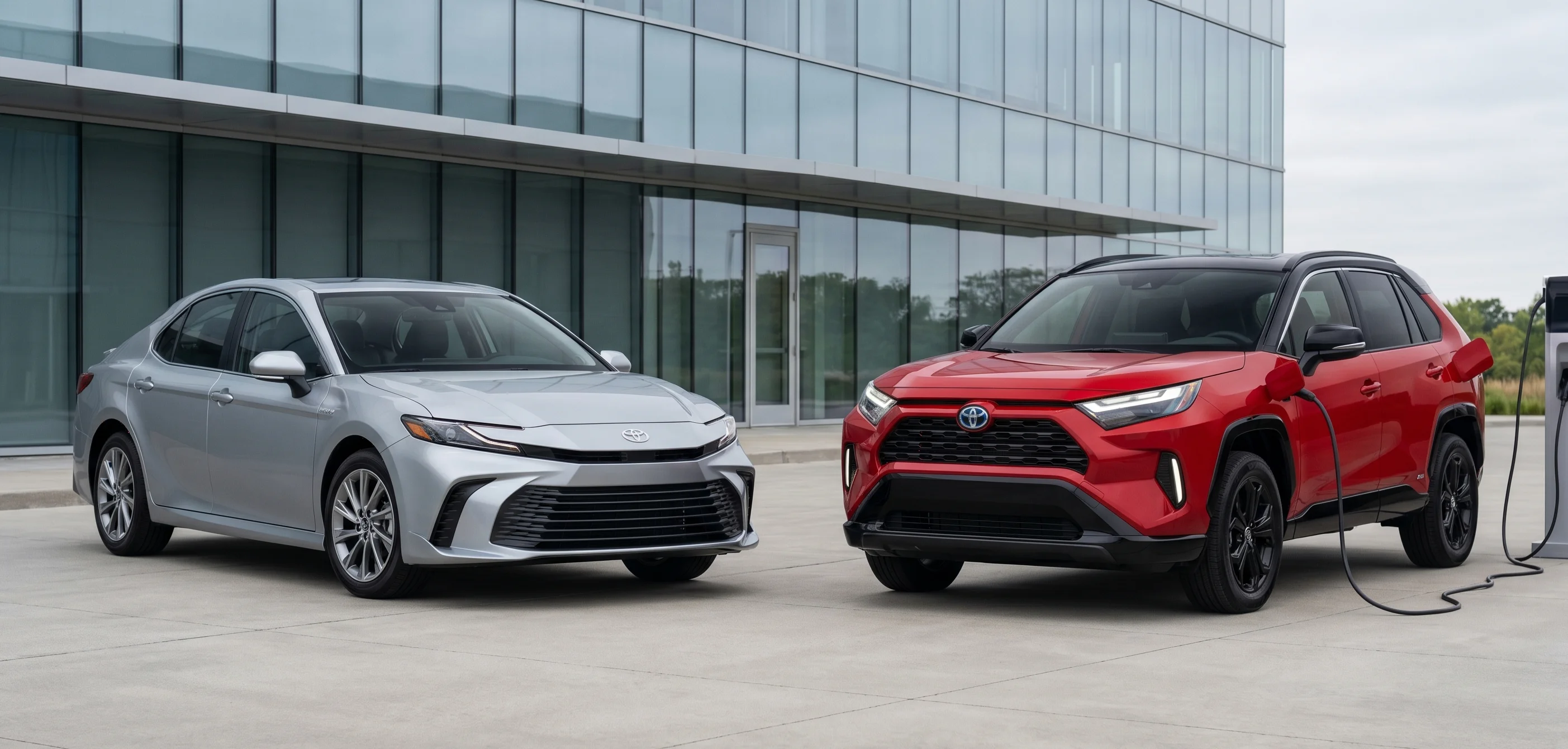
Hybrid vs Plug-In Hybrid at a Glance
| Feature | Hybrid (HEV) | Plug-In Hybrid (PHEV) |
|---|---|---|
| Plug-In Required? | No — self-charging | Yes — external charging for EV range |
| Electric-Only Driving | Short distances at low speed only | Up to 44–54 miles per charge |
| Battery Size | 1–2 kWh | 8–18+ kWh |
| Fuel Economy | Up to est. 57 mpg combined | Up to est. 52 mpg + EV miles |
| Home Charging Setup | Not needed | Recommended (120V or 240V) |
| Starting TSRP (Toyota) | From $28,550 | From $33,775 |
| Best For | Drivers who want efficiency with zero lifestyle changes | Drivers with home charging and short daily commutes |
All figures shown are EPA estimates based on 2026 Toyota models. Actual mileage will vary. TSRP excludes destination charge. Dealer sets the final price.
How Standard Hybrids Work
Self-Charging, No Plug Required
A standard hybrid — also called a Hybrid Electric Vehicle or HEV — pairs an internal combustion engine with a small electric motor and a compact battery pack, typically between 1 and 2 kilowatt-hours (kWh). The battery charges itself automatically through regenerative braking and the engine, so you never need to plug it in.
Seamless Power Management
At low speeds and during stop-and-go driving, the electric motor can power the vehicle on its own for short stretches, reducing fuel consumption. As speed increases or more power is needed, the gasoline engine engages and works alongside the electric motor. A sophisticated control system manages the power split in real time, choosing the most efficient combination for every driving situation.
Toyota Hybrids on the Road Today
The 2026 Toyota Camry is now exclusively hybrid-powered across every trim and delivers up to an estimated 51 mpg combined. The 2026 Toyota Prius achieves up to an estimated 57 mpg combined. Both operate seamlessly at the pump — no charging required.
How Plug-In Hybrids Work
Larger Battery, Real Electric Range
A plug-in hybrid electric vehicle (PHEV) builds on the same hybrid foundation but adds a significantly larger battery — generally between 8 and 18 kWh — that you recharge by plugging into an external power source. This larger battery allows a PHEV to drive meaningful distances on electricity alone before the gasoline engine needs to engage.
Seamless Transition to Hybrid Mode
Once the electric charge is depleted, the vehicle transitions seamlessly into standard hybrid mode, using the gasoline engine and electric motor together exactly like a conventional hybrid. You get the benefits of electric driving for daily trips with the security of a gasoline engine for longer journeys — no range anxiety.
Toyota PHEVs Available at Tustin Toyota
The 2026 Toyota RAV4 Plug-in Hybrid, completely redesigned for this model year, delivers up to an estimated 54 miles of all-electric driving range on the SE trim and produces 324 combined horsepower — enough for many Tustin and Irvine commuters to complete their daily driving without using any gasoline. The 2026 Toyota Prius Plug-in Hybrid offers up to an estimated 44 miles of all-electric range with 220 horsepower and achieves up to an estimated 52 mpg combined once the battery is depleted.
Charging a Plug-In Hybrid at Home
One of the most common questions about PHEVs is how charging works. The process is simpler than most people expect.
| Charging Method | Power Source | Charging Speed | Prius PHEV Full Charge | Equipment Needed |
|---|---|---|---|---|
| Level 1 | Standard 120V outlet | 1.4–2 kW | ~11 hours | Included charging cord |
| Level 2 | Dedicated 240V outlet | 3.3–7.7 kW | ~4 hours | Home charging station (purchased) |
| DC Fast Charging | Public DC station | Up to 50 kW | N/A (RAV4 PHEV only) | CCS port (RAV4 PHEV XSE/Woodland) |
DC Fast Charging on the 2026 RAV4 Plug-In Hybrid
The 2026 RAV4 Plug-in Hybrid goes further — the XSE and Woodland trims include a CCS charging port capable of DC fast charging, which can replenish the battery from 10% to 80% in approximately 30 minutes. That capability is unusual for a plug-in hybrid and adds meaningful flexibility for on-the-go charging.
Tips for Tustin-Area PHEV Owners
Plugging in every night ensures your battery is topped off for the next day’s driving. Many PHEVs and home charging stations support scheduled charging during off-peak electricity hours, which can reduce utility costs. And if you forget to charge or lose power, the gasoline engine takes over seamlessly — you are never stranded.
Cost Differences — Upfront and Over Time
Purchase Price
Standard hybrids generally carry a lower purchase price because their batteries and electric systems are smaller and less complex. PHEVs carry a higher initial price due to their larger batteries and additional charging hardware — but PHEV owners who charge regularly can dramatically reduce or virtually eliminate gasoline costs for daily driving.
| Model | Type | Starting TSRP* | Est. MPG / EV Range | Horsepower |
|---|---|---|---|---|
| 2026 Toyota Prius | Hybrid | $28,550 | Up to est. 57 mpg combined | 194 (FWD) |
| 2026 Toyota Camry | Hybrid | $29,300 | Up to est. 51 mpg combined | 225 (FWD) |
| 2026 Toyota Prius Plug-in Hybrid | PHEV | $33,775 | Up to est. 44 mi EV / 52 mpg hybrid | 220 |
| 2026 Toyota RAV4 Hybrid | Hybrid | $31,900 | Up to est. 44 mpg combined | 226 (FWD) |
| 2026 Toyota RAV4 Plug-in Hybrid | PHEV | $41,500 | Up to est. 54 mi EV | 324 |
*All TSRP figures represent the manufacturer’s suggested retail price for the lowest available trim and do not include destination charge. Dealer sets the final price. All MPG and EV range figures are EPA estimates. Use for comparison purposes only. Actual mileage will vary.
Tax Incentives in 2026
The federal $7,500 EV tax credit expired on September 30, 2025 under the One Big Beautiful Bill Act. PHEVs purchased in 2026 are no longer eligible for that credit. However, the OBBBA introduced a new auto loan interest deduction of up to $10,000 per year for qualifying new vehicles assembled in the United States (tax years 2025–2028). IRS implementing regulations remain in flux as of May 2026, so consult a tax professional for the latest guidance on eligibility.
California Incentives
California’s Clean Vehicle Rebate Project (CVRP) closed in November 2023. Income-eligible Californians may still qualify for assistance through the Clean Cars 4 All or Driving Clean Assistance Program (DCAP). Visit DriveClean.ca.gov for current California incentives based on your ZIP code.
Battery Size, Warranty, and Long-Term Ownership
| Battery Spec | Hybrid (HEV) | Plug-In Hybrid (PHEV) |
|---|---|---|
| Typical Battery Size | 1–2 kWh | 13.6 kWh (Prius PHEV) / 18+ kWh (RAV4 PHEV) |
| External Charging | Not required | Required for EV range benefit |
| Battery Chemistry | Lithium-ion | Lithium-ion |
| Toyota Warranty | 10 years / 150,000 miles | 10 years / 150,000 miles |
| Maintenance | Minimal — self-managing system | Regular charging recommended |
Standard hybrid batteries are compact and designed to cycle continuously within a narrow charge range. They never need external charging, require minimal maintenance, and are engineered to last the life of the vehicle under normal driving conditions.
PHEV batteries are larger and do require regular charging to maximize their electric driving benefit. Consistent charging habits, avoiding extreme heat exposure, and following Toyota’s maintenance recommendations all contribute to long battery life.
Toyota backs every hybrid and plug-in hybrid battery with a 10-year / 150,000-mile limited warranty — one of the strongest in the industry. This coverage applies to all 50 states for model year 2020 and newer vehicles, giving Tustin-area drivers confidence that the battery is protected for the long haul.
Which One Is Right for You?
Choose a Hybrid If…
You want better fuel economy without changing your routine. There is nothing to plug in, no home charging setup required, and no learning curve. Hybrids are ideal for drivers in Anaheim, Costa Mesa, and Orange who want a straightforward efficiency upgrade with the lowest possible purchase price.
Choose a Plug-In Hybrid If…
You have access to home or workplace charging and your typical daily driving falls within the electric-only range. If your round-trip commute is under 40–50 miles, a PHEV like the RAV4 Plug-in Hybrid or Prius Plug-in Hybrid can handle most of your driving on electricity alone — and the gasoline engine is always there for longer trips to Huntington Beach, Corona, or beyond.
Both Reduce Emissions
Both types deliver meaningfully lower emissions than conventional gasoline vehicles. PHEVs take it further during electric-only operation, producing zero tailpipe emissions — a tangible benefit for air quality across the Orange County region.
Explore Toyota Hybrids and Plug-In Hybrids at Tustin Toyota
Toyota’s electrified lineup gives you options at every price point and vehicle size. Whether you are drawn to the efficiency of the Camry Hybrid, the versatility of the RAV4 Plug-in Hybrid, or the iconic fuel economy of the Prius, the team at Tustin Toyota can help you find the right fit for your driving life.
Visit us at 36 Auto Center Dr, Tustin, CA 92782, or call our sales team at 714-909-2159 to schedule a test drive.
All MPG and MPGe figures shown are EPA estimates. Use for comparison purposes only. Actual mileage will vary based on driving conditions, vehicle condition, and other factors. All TSRP figures represent the manufacturer’s suggested retail price for the lowest available trim and do not include destination charge. Dealer sets the final price. Tax incentive information is provided for general awareness only and does not constitute tax advice. Consult a qualified tax professional for guidance specific to your situation.
0 comment(s) so far on What’s the Difference Between a Hybrid and a Plug-In Hybrid?